This blog is part of our series “Early Funding Paves the Way for Biomedical Innovation,” featuring conversations with leaders at three companies that are working on diagnostic or therapeutic solutions for people with Inflammatory Bowel Disease. These stories highlight how early-stage investments accelerated their novel ideas and how our ongoing partnership has supported their evolving work.
Below are highlights from our conversation with Gary Mathias, Co-Founder and CEO at Thetis Pharmaceuticals, which is a clinical-stage biopharmaceutical company developing alternatives to immuno-suppressive therapies.
How do your innovations address gaps in managing and treating IBD?
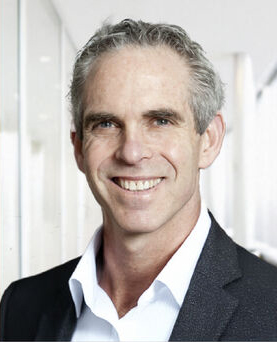
Gary Mathias: Thetis Pharmaceuticals is developing TP-317 as a safe, oral therapy for ulcerative colitis and Crohn’s disease patients. TP-317 is a fundamentally different approach to treatment compared with approved therapies that control inflammation by suppressing the immune system. While such therapies have made important advances for many patients, only 30% to 50% respond initially, and more than 50% of those who do respond relapse within two years.
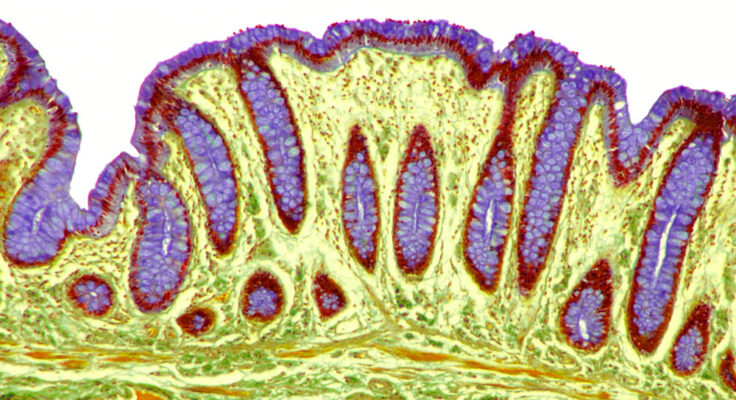
TP-317 works differently. It’s based on a natural compound the body already produces, called Resolvin E1, that helps restore the gut lining to health after infection or injury. Think of the gut lining like the skin over a wound. Current drugs block the inflammation, while TP-317 helps the tissue grow back. That process of rebuilding the gut’s protective barrier, what scientists call mucosal healing, is what most existing therapies don’t directly address. In IBD, we need both inflammation control to calm the fire and mucosal healing to restore gut health.
In IBD we need both inflammation control to calm the fire and mucosal healing to restore gut health.
Why have you focused your work on IBD?
Gary: I have ulcerative colitis, as do members of my extended family, so this work is deeply personal. I know what it means to live with a disease where the treatments available today leave many patients without lasting relief.
My earlier career was in healthcare investing and banking, and I was fortunate to meet former Pfizer R&D [Research & Development] executives who had a concept to stabilize bioactive lipids. These lipids are molecules the body produces naturally but are too fragile to be developed into a conventional drug. Based on that concept, we raised funding to develop the technology and then selected Resolvin E1 as the most promising candidate for treating ulcerative colitis and Crohn’s disease.
What was the role of early funding in your product development?
Gary: In 2024, we completed a first-in-human study in healthy volunteers. The TP-317 tablet was well-tolerated, effectively delivered the active compound to the bloodstream, and showed that it was engaging the right biological target. That milestone was built on years of foundational work supported by the Rainin Foundation, along with NIH and the Crohn’s & Colitis Foundation. Together, that early funding generated the evidence base that allowed us to secure significant investment from the Helmsley Charitable Trust to conduct the trial itself.
What comes next in your development of this technology?
Gary: Based on those results, Helmsley committed an additional $9 million to take TP-317 into a trial in actual ulcerative colitis patients, beyond just healthy volunteers. That’s a critical step where we begin to see whether the drug works in people living with the disease. Their funding also supports the additional safety studies required before we can run larger trials. These studies ensure the drug is safe enough to test in a broader population over the 52 weeks required for drug approval. We expect to begin enrolling patients in the second half of 2026.
What would you say to someone living with IBD about this research?
Gary: I’d say that people who understand what it’s like to live with this disease are working to find solutions that address gaps in current treatments. The path from first-in-human studies to FDA approval is long, often a decade or more. This extended timeline requires resources and partnerships that go well beyond what any single mission-based funding organization like the Rainin Foundation, the Crohn’s and Colitis Foundation, or Helmsley can provide. Thetis is actively seeking a collaboration with a pharmaceutical partner to conduct combination trials with TP-317 in both ulcerative colitis and Crohn’s disease. There is a huge funding gap between where we are today and the finish line, and closing this gap is urgent.
The patient is waiting, and I am one of them.
The patient is waiting.