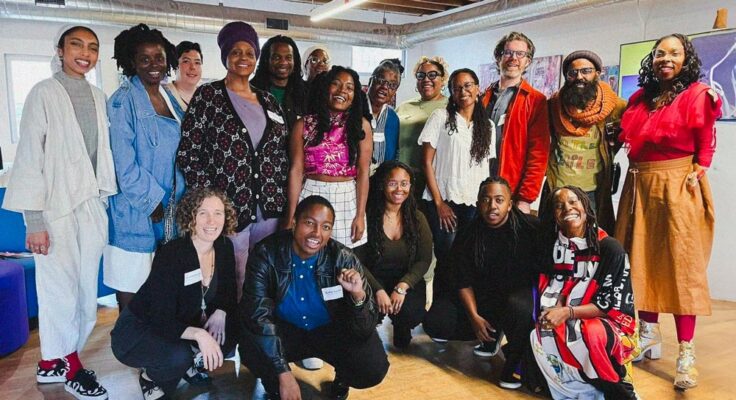
The Kenneth Rainin Foundation’s Arts Program is focused on building a durable arts ecosystem where diverse visionary artists have the resources to live and create abundantly. Our grantmaking supports artists to develop and produce new work, while also addressing the bigger structural barriers that make it difficult to be an artist in the Bay Area. In this moment of destabilizing change when the entire arts ecosystem feels vulnerable, the importance of infrastructure building is more resonant than ever.
Our systems change work focuses on three priorities: Space, Policy and New Alternative Models. We know that artists need to have permanently affordable places to live and work, a stronger voice in the policies that affect them, and new approaches like cooperatives and shared service models that unlock access to capital. As we look toward solutions, our approach has been to listen and provide those closest to the work with sustained investment for priorities they’ve identified.
In this blog we lift up three grantees that are bringing radical imagination to new models and systems that help the arts community be more adaptable and resilient. We sat down with the organizational leaders to learn how they are building collective power through policy and advocacy, housing stability, and a new cooperative model. They discuss the conditions needed for systems change and how funders can best support this type of innovation. Continue reading to explore insights from:
- Julie Baker, CEO of California for the Arts
- Zakiya Harris, Vision and Leadership Steward of BLACspace Cooperative
- Meg Shiffler, Director of Artist Space Trust
Tell us about your model and how it supports power building.
California for the Arts
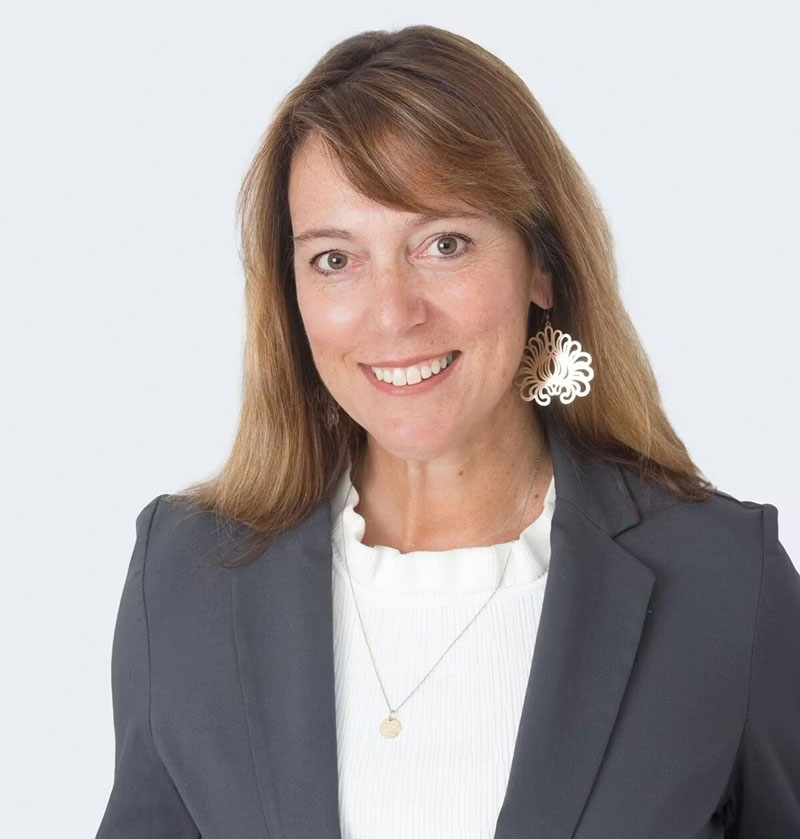
Julie Baker: At California for the Arts, our job is advocacy. We support artists, culture bearers and creative workers to inform the way that public policies are developed and implemented. Our Grassroots Artists Advocacy Program (GAAP) fellowship recognizes that artists possess unique insights into community needs, but often lack access to strategic advocacy tools, time and financial resources.
GAAP is a nine-month, cohort-based program that equips artists to use their creative practice to advocate for just and equitable policies in their communities. Our program is based on a living wage, which our fellows are paid. We’re piloting it now to test and refine advocacy approaches with strong potential for statewide replication and expansion. The folks in GAAP’s first cohort called it transformative.
We believe a program like this can support changing who has influence over power. The fellows translate cultural work into concrete policy solutions that support artists of color, immigrants, caregivers and marginalized communities. Sabareh Kashi, an inaugural GAAP fellow, addressed the increasing social fragmentation—across lines of race, class, culture, religion and political identity—in Oakland. This division, she recognized, diminishes neighborhood resilience, erodes civic trust and lowers democratic engagement. Simultaneously, arts and cultural practices are often overlooked in public budgets and policy, despite their proven ability to build social cohesion and civic participation. Her solution was a plan centered on a community-wide celebration of Nowruz, the Persian observance of the spring equinox and new beginnings. Even after her fellowship concluded, she continues her work, implementing events and advocacy to foster intercultural connection across Oakland neighborhoods.
BLACspace Cooperative
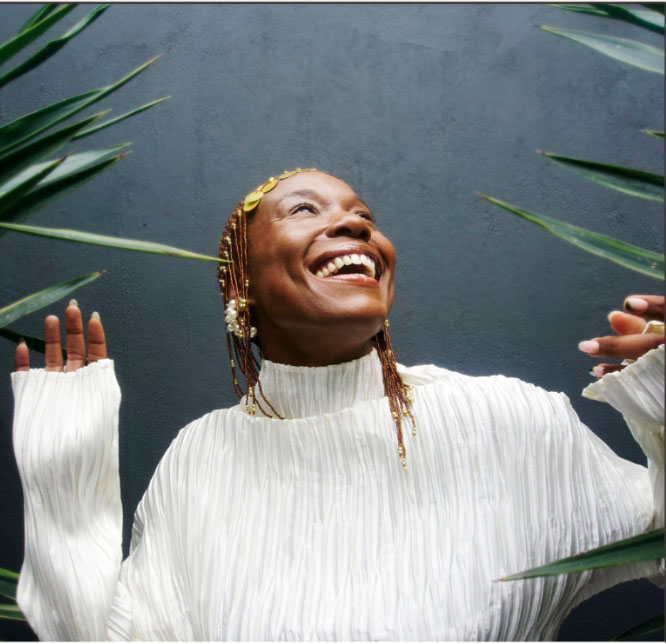
Zakiya Harris: BLACspace Cooperative connects and sustains creative organizations and businesses that promote Black arts and culture and are rooted in Oakland. BLACspace is a California Cooperative Corporation owned and governed by members. Our member network provides mutual aid, storytelling and technical support.
Our North Star is cultural reforestation, helping arts and culture grow and flourish in Oakland by nurturing the people, spaces and stories that form the cultural roots of our community. We believe that by holding space to heal and build shared power, we strengthen our roots. We also hold deeply the values of trust, healing and wellness that create the conditions for people to collaborate, connect and share resources.
An example of our technical support is “Buying Back Oakland,” which we designed to bring clarity, connection and collective power to the process of reclaiming space. It was rooted in real property acquisition efforts within the BLACspace ecosystem, and participants could workshop their real estate visions. This training provided a grounded understanding of the legal, financial and cooperative models needed to pursue community-based real estate projects. The participants also built a shared language around ownership and governance, laying the foundation for collaboration and peer support.
BLACspace Cooperative is helping disrupt the power dynamic and moves us towards self-determination. We want to bring back what’s been taken from the Black community and grow something stronger in its place.
Artist Space Trust
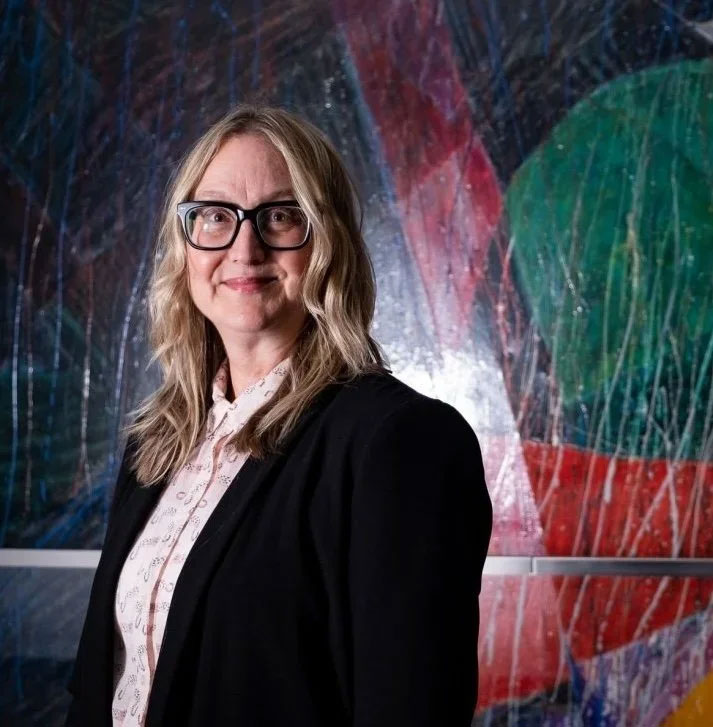
Meg Shiffler: Artist Space Trust secures affordable housing and live/work spaces for low-income artists and culture bearers across the Bay Area. We use the community land trust model, a community-owned real estate approach that grew out of the Civil Rights Movement. We’re building the early foundation of our expanding portfolio through mutual aid—direct property donations/bequests, mostly from elder artists, and have secured over $13 million in properties so far.
Many elder artists in the Bay Area purchased homes when it was still possible to do so and this housing stability helped them to remain in the region. Bequeathing their home to the trust and keeping artists in this beloved home generation after generation really resonates with elder artists.
Properties in Artist Space Trust’s Artist Housing Commons (rental and homeownership) have ground lease restrictions that ensure artist occupation and co-stewardship for generations to come. By removing housing and live/work properties from the for-profit market, we keep these spaces permanently affordable so that artists can live and work in the Bay Area without threat of displacement. Our goal is to bring 300 homes for artists into the Artist Space Trust Commons in the next ten years!
This is not a small thing, rooting an artist has expansive impact—not only for them, their lives and families—but for entire communities. This stability contributes to the cultural vibrancy, education impacts, economic strength, and the health and wellness of their communities.
How has designing with community strengthened your model?
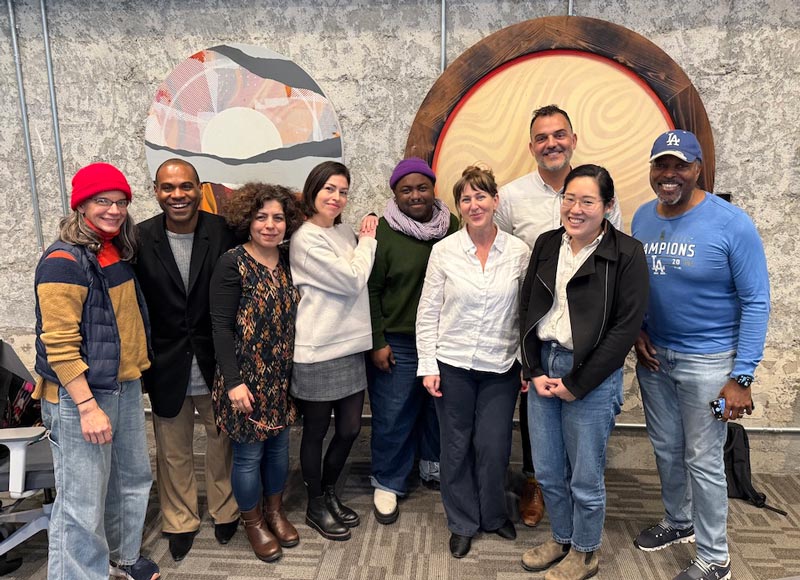
Julie Baker: When we launched the Grassroots Artist Advocacy Program, we co-created the curriculum with the fellows, basing it on lived experience and empirical data. The program operates on the principle of emergent strategy, echoing adrienne maree brown’s insight: “What we practice at the small scale sets the patterns for the whole system” [a core principle from brown’s Emergent Strategy]. Instead of massive top-down reform, we invest in a cohort of five to eight artist advocate fellows. Their focused, small-scale interventions are well supported and given the time and resources to compound and interact over time. The cumulative growth of each fellow’s knowledge, network and insights results in successful policy outcomes. This provides lasting benefits for artists and their communities, as the well-being of artists is fundamental to sustained community flourishing.
Zakiya Harris: In general, our model benefits from being designed by and with community. Our model is a conversation in collaboration, in community and with community, and that has allowed us to stay agile, nimble, fluid and responsive to community-determined needs.
BLACspace was born from the alignment of two projects and being pushed from community to center Black folks. These projects—Reimagining Business Models for the Arts and Arts Web—both funded by the Rainin Foundation, were exploring ideas in response to the arts community needing more opportunities to connect artists and services as well as models beyond the nonprofit. A group of vision keepers, who are the founders of BLACspace, came together to reimagine a model that would strengthen the network of Black arts, ownership and culture in Oakland, now and in the future. All of us were holding space in Oakland, and some of us had recently lost our buildings. We knew that the preservation of cultural spaces creates anchors, and if we don’t have anchors, where do the artists meet, exhibit, play, experiment, protest?
Meg Shiffler: Artist Space Trust builds self-determination for low-income artists by providing pathways to security and stability to live and work in the Bay Area while shaping their own futures. We are a program of Vital Arts and Northern California Land Trust. Our model is built in collaboration with our Advisory Council and we listen closely to these artists’ needs and experiences, embed their perspectives into every aspect of program design and stay adaptable as challenges arise. We also learn from a broader ecosystem of artists and culture bearers, housing experts, funders, policymakers and community organizers to ensure that our programs are responsive, equitable and meet the needs of diverse Bay Area artist communities.
Innovation in this work is not only about structures or policy, but about creating resilient systems that reflect the lived realities of the people they are meant to serve, stabilizing communities and supporting artists’ ability to thrive for generations.
What does it take to create new models and shift systems?
Time And Resources
Julie Baker: Building new models requires time and resources. The iterative loop of development, testing and refining requires time to ensure the models are robust, equitable and address the challenges they are designed to solve. Success hinges on having the flexibility and time to assess outcomes, gather feedback from stakeholders and adapt the model based on empirical data and lived experience. Without a safety net of resources—financial, human and technological—organizations are incentivized to maintain the status quo, stifling the very creativity required for systemic change and long-term transformative impact.
The Rainin Foundation provided two years of funding to pilot and thoroughly test the Grassroots Artist Advocacy Program’s viability. They also invested by providing a senior-level leader, Ted Russell [former Rainin Foundation Director, Arts Strategy & Ventures], who has extensive experience and expertise. Under normal circumstances and budgetary constraints, we simply would not have been able to afford or access this extraordinary resource. Ultimately, this entire process is rooted in trust-based philanthropy, which focuses on providing flexible, multi-year, general operating support and signals a profound commitment to our vision and capacity.
Without a safety net of resources—financial, human and technological—organizations are incentivized to maintain the status quo, stifling the very creativity required for systemic change.
Julie Baker
Imagination, Audacity And Trust
Zakiya Harris: Building new models takes imagination, audacity and most importantly time and trust—with your funders and your team. When you’re investing in people who are daring to do something different there needs to be a deeper level of relationship and trust. In all my years of doing this work, I’ve never had this much time. Often we’re expected to share things we’re accomplishing with the funder rather than focusing on the internal infrastructure work that is required.
The Rainin Foundation is our original and longest funder. They understand what we’re trying to build, and they have invested in us imagining something beyond what we know. Even as the world and the climate is shifting, they’ve been consistent, flexible and fluid.
When you’re investing in people who are daring to do something different there needs to be a deeper level of relationship and trust.
Zakiya Harris
Community Perspectives And Cross-Sector Collaboration
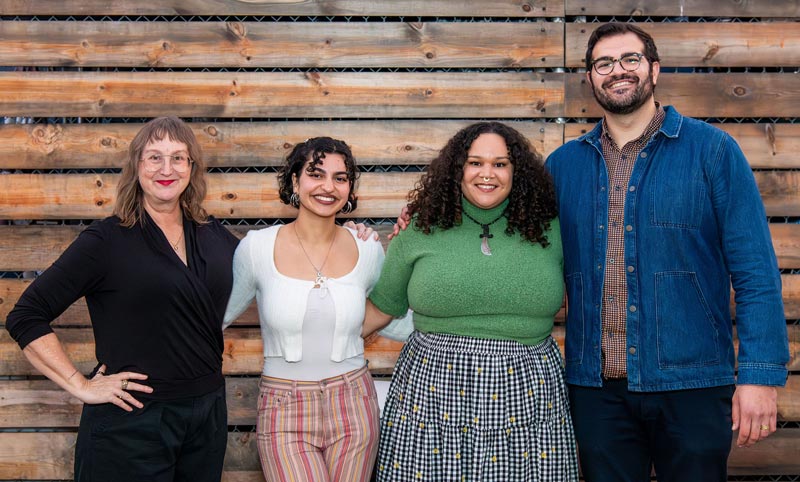
Meg Shiffler: Lasting change happens when the people most affected are at the center of design and decision-making. We’re also partnering with funders, policymakers, community organizations and service providers to ensure that housing and creative space initiatives are equitable, sustainable and impactful. Creating this coordinated ecosystem can sustain arts and cultural communities over the long term.
The Rainin Foundation was a seed funder in our first three years and just renewed another three years of funding. This gives us the flexibility to experiment with new approaches and refine a model that can be adapted and scaled to benefit artists and communities beyond the Bay Area. They also opened doors to a peer network of creative land trusts nationally and internationally, which has been invaluable for learning best practices, sharing challenges and sparking new ideas.
Lasting change happens when the people most affected are at the center of design and decision-making.
Meg Shiffler
What more is needed to build a systems change movement within the arts sector?
Arts Advocacy Infrastructure
Julie Baker: To achieve systems-level change in how the arts and culture sector are valued, California needs a coordinated statewide arts advocacy infrastructure and a network of informed and engaged advocates. This should include sustainable systems, user-friendly tools and accessible training that empower artists and creatives to participate in advocacy with minimal disruption to their careers. We also need an adaptive approach to relationship management that focuses on the enduring value of arts and culture beyond individual political terms.
Unrestricted, Multi-Year Funding
Zakiya Harris: The sector needs more unrestricted, multi-year funding that invests in systems change, invests in new models, invests in people who are daring to do something different. We also need a deeper level of relationship and trust to have the right folks at the table and have funders who understand that.
Stronger Cross-Sector Collaboration
Meg Shiffler: We need to shape efforts in coalition with funders, policymakers, city agencies and other stakeholders to create a coordinated ecosystem. By building these coalitions, sharing knowledge and aligning resources, we can strengthen and sustain our sector, expand successful models and create opportunities that no one organization could achieve alone. The more we work hand-in-hand across sectors, the more powerful and scalable the impact will be.
The more we work hand-in-hand across sectors, the more powerful and scalable the impact will be.
Meg Shiffler
What’s next for your model?
Julie Baker: California has 58 counties. Serving a state this huge and culturally diverse with consistent arts advocacy strategy and activation is challenging. California for the Arts is piloting a new Regional Program Manager (RPM) position. The RPM will make connections within a region and understand the region’s political processes. This role will connect the region to our state work, help organize advocates and offer support on strategy.
Zakiya Harris: After working in the nonprofit industrial complex for 20 years, what excites me the most about BLACspace Cooperative is that it’s a cooperative. Right now, we’re sustained through philanthropy, but we are engaged in a very intentional practice of how to leverage our community and collective wealth and create revenue pathways and build a sustainable model.
Meg Shiffler: Securing debt-free property bequests remains a primary focus while we grow our capacity to take on larger live/work sites and collaborate with traditional affordable housing developers in regional cultural districts. If artists need support now, Artist Space Trust is distributing down payment assistance, up to $200K per home, in partnership with Northern California Land Trust, to help lower-income, first-time artist homebuyers purchase homes in Alameda County. This is another way Artist Space Trust supports long-lasting stability for artists and intergenerational wealth-building for artists, which is especially powerful when building pathways into homeownership for artists from cultural communities that are still experiencing the legacies of systemic housing injustice.