The Kenneth Rainin Foundation is committed to continuous improvement and transparency, sharing both what we learn and where we see opportunities to do better. In that spirit, I am providing an update about our Early Care Spaces program, which launched in 2024 to support early language and literacy development for children outside of traditional education systems.
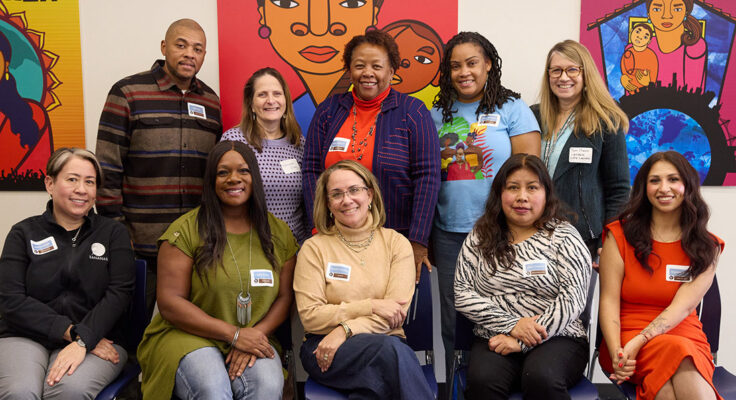
This program focuses on friend, family and neighbor care—the informal caregivers who play a critical role in early childhood education. Through this work, we’ve had the opportunity to learn from incredible organizations that are deeply rooted in Oakland communities. We are building on the lessons of the first two grant cycles, using grantee feedback and field insights to guide the program’s continued evolution.
Pausing The Grant Cycle
Before turning to our learnings, I want to acknowledge that we paused the 2026 grant application cycle. This decision was informed by evaluation findings and conversations with grantees. We recognize that delaying a funding opportunity is never ideal, especially at a time when organizations and caregivers are facing increasing challenges. To provide a financial buffer, we have awarded one-time general operating bridge grants from our Response Fund to our Early Care Spaces grantees to help them continue their work and services without interruption.
We will launch a revised grant offering in 2027, continuing to work toward a future where every Oakland child can thrive as a reader and lifelong learner.
Why We Created Early Care Spaces
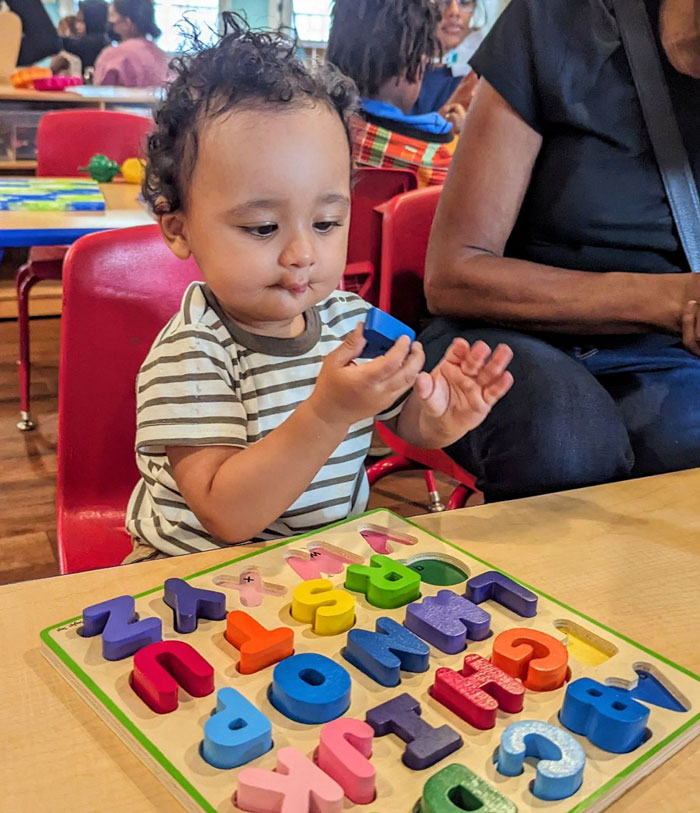
A majority of the funding for early childhood education in Oakland is not content-specific, which means funding to support early literacy and language development specifically is limited. This is why we developed a grant opportunity focused on scaling content-specific programming for Oakland’s youngest learners. We also wanted funding to prioritize the most under-resourced segment of Oakland’s mixed-delivery childcare system—informal caregivers.
Data shared by First 5 Alameda County indicate that 50% of Alameda County’s family, friend and neighbor caregivers are located in Oakland. Despite this, very little of the $75 million in public funding recently invested in Oakland’s early care ecosystem through Measures A and CC is directed toward this form of care. Because informal caregivers are not connected to the systems that serve as common pathways to literacy and language programming, it can be difficult for them to access programs, and challenging for programs to reach informal caregivers.
To limit barriers, we structured an open application opportunity in the hopes that organizations that aren’t connected with the Foundation but were connected to family, friend and neighbor providers, would apply.
Learnings And Insights
As only the second open application process for our Education Program and our first to focus on informal caregivers, Early Care Spaces has enabled us to connect with new organizations, people and insights. In fact, 70% of the grant applications were from first-time applicants. Given our relatively limited experience in this area and the number of new grantees, we wanted to better understand whether the program was effectively addressing the gaps we initially identified.
To capture learnings, in 2026 we partnered with Informing Change, an evaluation consultant, to talk with Early Care Space grantees twice over a seven-month period. Fourteen of the 21 grantees opted to participate. Their interviews helped us better understand grantees’ experiences and identify where the program was meeting needs in Oakland’s informal care ecosystem and where improvements were needed.
We then paired the interview findings with the expertise of the David and Lucile Packard Foundation, a fellow funder with over a decade of experience supporting family, friend and neighbor care. Their report, Scaling Programs for Family, Friend and Neighbor Caregivers, identified the critical conditions that are needed to expand support for informal caregivers, including:
- Community connection and trust
- Staff capacity and support
- A codified program model that can be adapted
- Access to space, infrastructure and resources
- Start-up and sustained funding
- Support from leaders and institutions
Grantee And Community Strengths
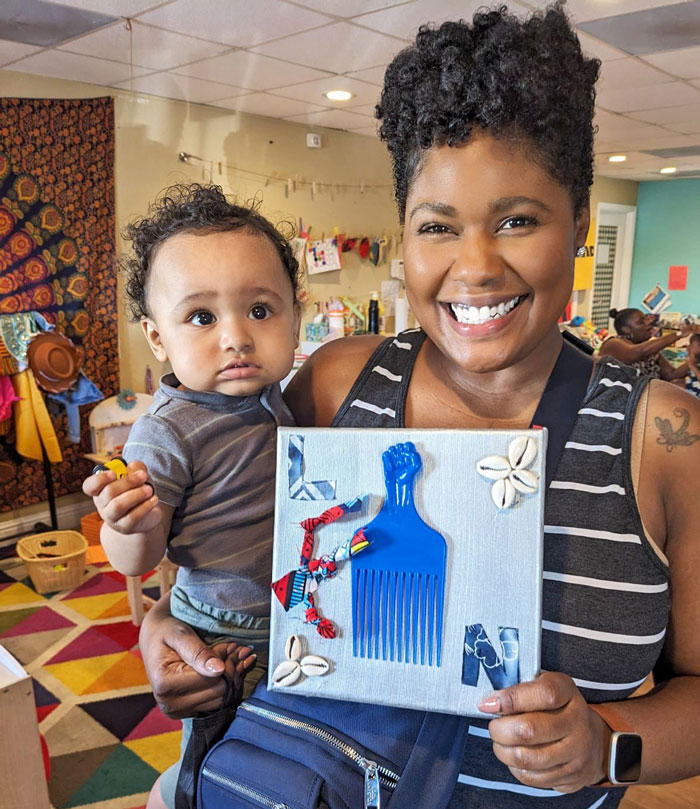
When it comes to community connection, trust and support from leaders, Early Care Spaces grantees appear to be thriving. Because grantees are operating outside of and in-between formal institutions, they tend to become more than one-service providers. To meet the needs of children and families in their communities, they often go beyond what might be typical for a formal early childhood education space. This leads to a nimble manner of working and a range of skills that result in opportunities for learning and partnership. And the ecosystem seems to nurture this spirit of collaboration. We saw no evidence of competitiveness. In fact, we saw a strong sense of community and camaraderie.
Program Challenges
On the other hand, we learned of considerable challenges in the conditions needed to support informal caregivers over time. Grantees demonstrated varying knowledge, resources and capacity around early literacy and language development. Beyond the challenge of tackling this learning curve and finding the bandwidth to do so, organizations reported great difficulty when seeking out space and relying on infrastructure and resources for translation, book access, caregiver outreach and enrollment. One of the most difficult-to-access resources reported was money. Whether they need start-up or ongoing funds, organizations serving informal care providers experience more barriers than traditional education systems, and funding capacity is even more strained.
Grantees maintain a deep commitment to early literacy and informal care. However, the challenges identified signal significant gaps in Oakland’s ecosystem to scale literacy and language programming for informal caregivers.
What’s Next

We are encouraged by the progress of our Early Care Spaces grantees. Their feedback and the evaluation by Informing Change bring important findings within Oakland’s informal care ecosystem into sharper focus. This reflection also made us realize that as a small foundation, we cannot address these challenges alone and that meaningful progress will require broader collaboration.
Pausing the application cycle gives us time to strengthen the program and position it for greater impact. This includes pursuing additional funding and partnerships to support the work, addressing broader conditions that affect the health of the ecosystem, and working with grantees to define clearer, more actionable indicators. We recognize that this pause comes at a challenging time. Grantees have shared that supporting informal caregivers has become increasingly difficult amid recent state and federal policy changes. To help navigate this period, one-time general operating bridge grants from our Response Fund to all Early Care Spaces grantees are intended to support continuity in services.
Throughout this process, our commitment to the children and communities we serve remains unchanged. In partnership with our grantees, we are dedicated to expanding opportunities for all Oakland children to become strong readers and lifelong learners.