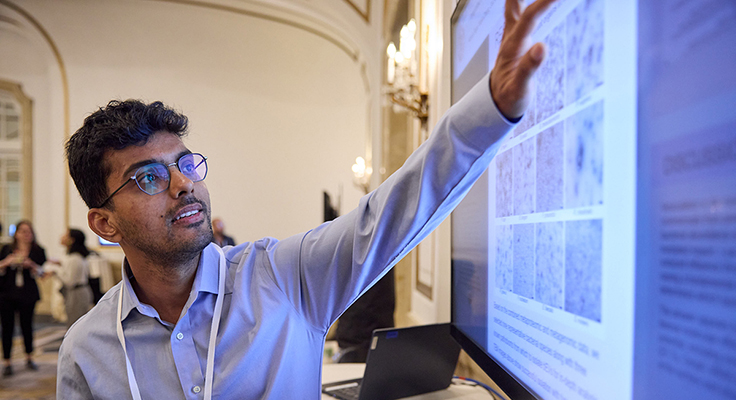
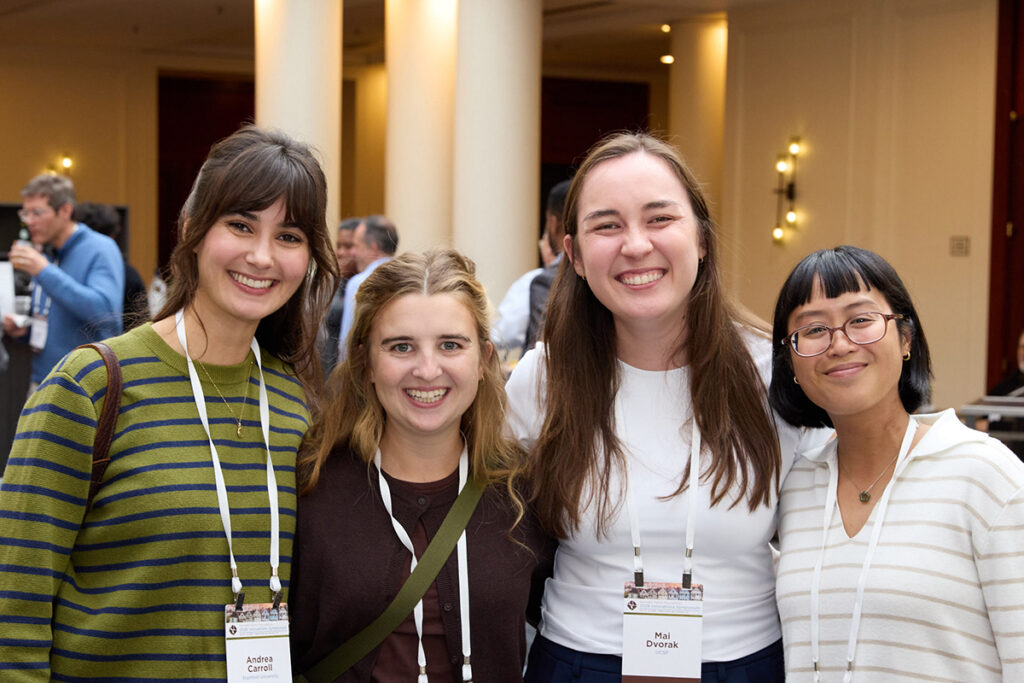
In July, the Kenneth Rainin Foundation hosted its 14th annual Innovations Symposium. Over 160 researchers from across the globe gathered in San Francisco to share research findings, engage in dialogue and spark new ideas and collaborations. From how cells interact in the gut to the gut-brain connection to how we can harness artificial intelligence to predict patients who will develop Inflammatory Bowel Disease (IBD), seasoned scientists and early career researchers alike shared how they’re pushing the field forward.
“This extraordinary event is about sharing discoveries and advancing the understanding of IBD. But it is also about creating relationships that lead to breakthroughs that none of us could achieve alone. This year, that sense of community feels more important than ever,” said Jen Rainin, PhD, CEO, in her opening remarks. “In the face of active opposition to science and in a time where stating what seems to be obvious—that science is made stronger by diversity of thought, experiences and approaches—the Rainin Foundation continues to support investigators who are pushing boundaries.”
This extraordinary event is about sharing discoveries and advancing the understanding of IBD. But it is also about creating relationships that lead to breakthroughs that none of us could achieve alone. This year, that sense of community feels more important than ever.
Jen Rainin, PhD, CEO
Beginning From A Place Of Creativity

In addition to investing in research to cure chronic disease, the Kenneth Rainin Foundation champions the arts and promotes early childhood literacy. Creativity plays a role in all three of our program areas.
During a pre-event gathering with our Health grantees, we invited an Arts grantee to offer a unique form of inspiration. In a performance by Anna Gichan produced by Capacitor Creative with sculpture and choreography by Jodi Lomask, artists helped bring researchers into their creative minds ahead of the two-day convening.
Renowned Researchers Shared Their Expertise
Sixteen researchers from institutions around the world with unique specialties shared their latest work to advance the prediction, diagnosis and treatment of IBD:
- Clara Abraham, MD, Yale School of Medicine, Unraveling Connections: IBD Genes and Immunity
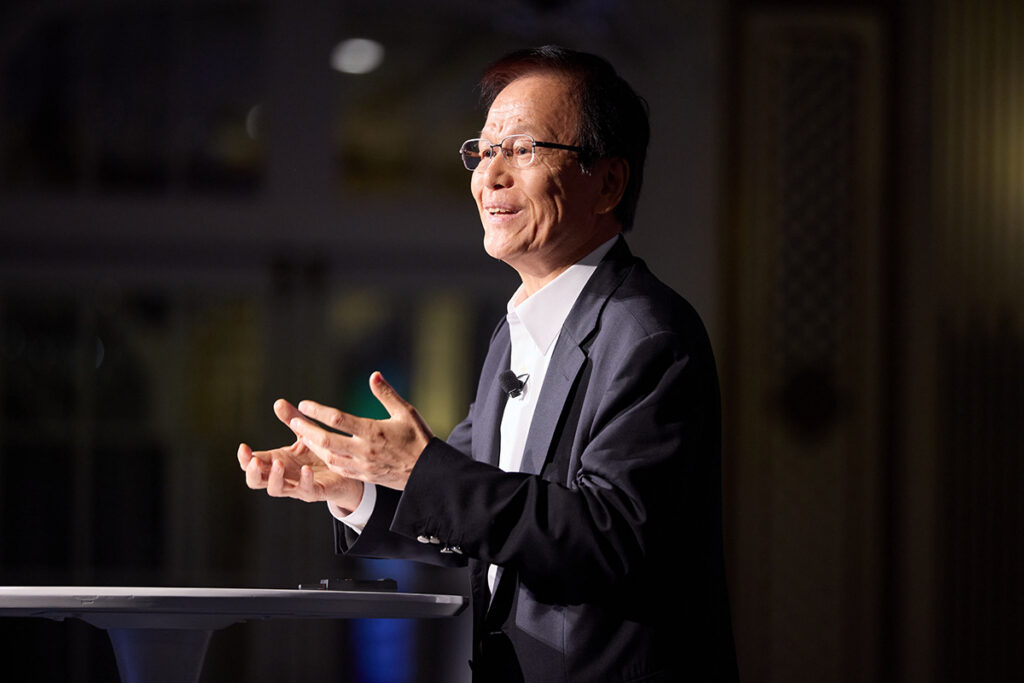
- Shizuo Akira, MD, PhD, The University of Osaka, Regnase-1: A Central Endoribonuclease That Governs Inflammation, Immunity and Metabolism
- Nicole Belle, MD, PhD, University of Pennsylvania, How LINGO2+ Enteric Neurons May be Healing the Gut
- Ken Cadwell, PhD, University of Pennsylvania, Host Adaptations to Gut Microbes
- Gloria Choi, PhD, Massachusetts Institute of Technology, Neuroimmune Regulation of Sickness Behavior
- Karen Edelblum, PhD, Icahn School of Medicine, Mt. Sinai, Gamma Delta Intraepithelial Lymphocyte Regulation of the Intestinal Barrier
- Kate Fitzgerald, PhD, UMass Chan Medical School, The Regulation of Inflammatory Responses: From Mechanisms to Therapeutic Modulation
- Kenya Honda, MD, PhD, Keio University School of Medicine, The Identification of Microbiota Members with the Potential to Shape Host Physiology
- Laura Mackay, PhD, University of Melbourne and Doherty Institute, Immunity in Context: How Tissues Shape Memory T Cell Responses
- Harmit Malik, PhD, Fred Hutch Cancer Center, Using Evolution to Enhance Antiviral Proteins
- James McCluskey, PhD, University of Melbourne and Doherty Institute, The Emerging Role of Mucosal Associated Invariant T Cells and MR1-Restricted T Cell Immunity
- Kathy McCoy, PhD, University of Calgary, The Identification and Targeting of Patient-Specific Pathobionts in IBD
- Florian Rieder, MD, Cleveland Clinic, Cracking the Nut of Stricturing Crohn’s Disease
- Vivek Rudrapatna, MD, PhD, University of California, San Francisco, Clinical AI for Mechanistic Science: From Treatment Heterogeneity to the Origins of IBD
- Christoph Thaiss, PhD, Stanford University, Environment-Gut-Brain Interactions
- Ramnik Xavier, MD, Broad Institute, Aberrant Tissue Remodeling in Treatment-Resistant IBD
The Foundation is committed to finding a cure for this complex disease and ensuring a robust pipeline of scientists with diverse perspectives in these fields is essential. We were thrilled to hear the latest research from our two Early Career Catalyst Awardees Nicole Belle, MD, PhD, and Vivek Rudrapatna, MD, PhD.
Emerging Scientists Added New Perspectives
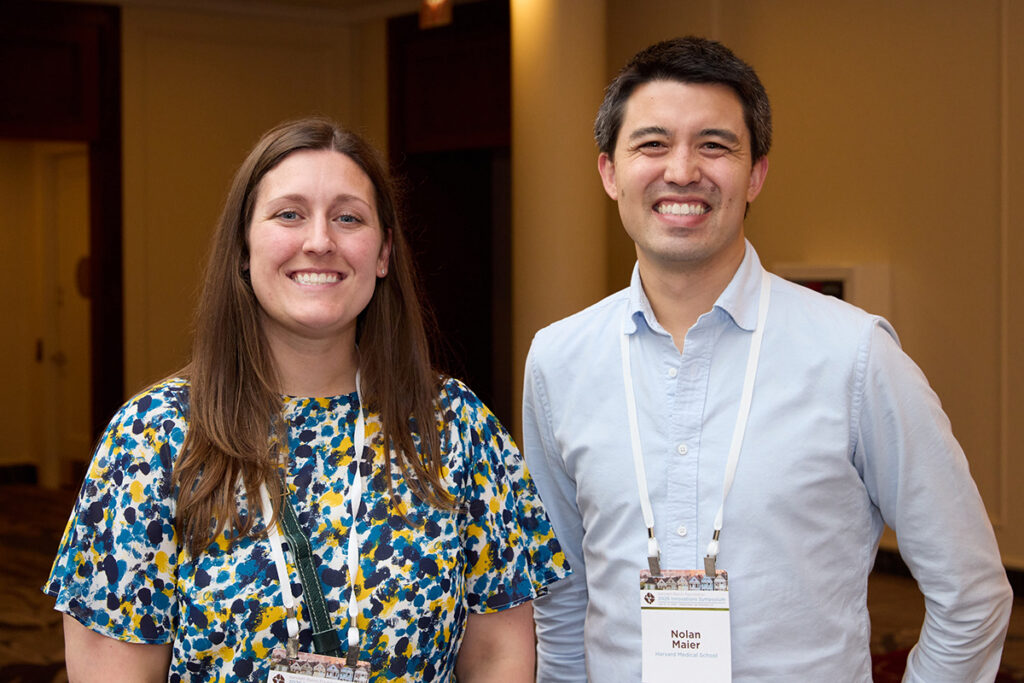
Investigators also shared their findings in digital poster sessions throughout the event. These sessions provide the opportunity for continued dialogue between scientists to move the work forward. Six poster presenters were invited to bring their research to the main stage during lightning rounds:
- Kristyna Blazkova, PhD, Bogyo Lab, Stanford Medicine, Microbial Proteases That Modulate the Activity of the Protease-Activated Receptor 2
- Allie Cheney, PhD, Talbot Lab, Fred Hutch Cancer Center, How Neuroimmune Interactions Promote Intestinal Repair
- Daniel Lee, PhD, Randolph Laboratory, Washington University in St. Louis, Ileal Crohn’s Stricture: A Proposed Vascular-Mesenteric Feedback Loop
- Nolan Maier, PhD, Jost Lab, Harvard Medical School, Characterizing Bioactivities of Microbiome-Derived Small Molecules
- Anukriti Mathur, PhD, Fitzgerald Lab, UMass Chan Medical School, Developing Small Molecule Control of Inflammasomes for the Treatment of IBD
- Xiangyu Pan, MD, PhD, Iliev Lab, Weill Cornell Medicine, Antifungal Therapy Improves Microbiome Dynamics in IBD
Reaffirming Our Commitment To This Scientific Community
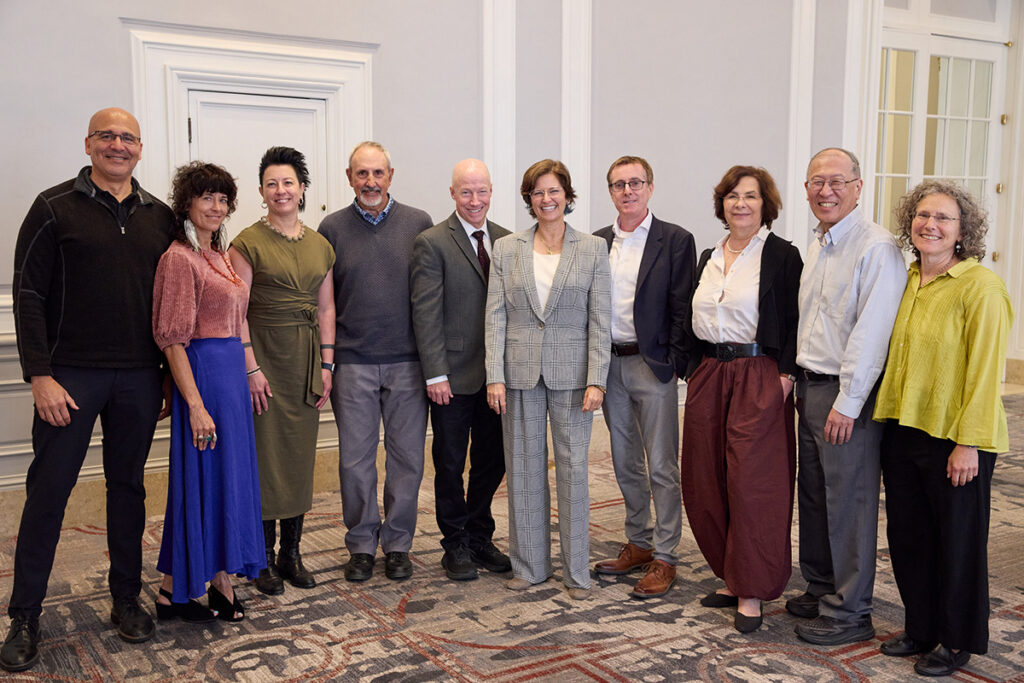
While other funding streams remain uncertain, the Rainin Foundation is committed to funding basic and translational research that has the potential to improve the lives of IBD patients. Our annual Innovator Awards support individual and collaborative projects. Similar to the priorities that guide the Symposium, we fund both established scientists and those who are earlier in their career to ensure a diversity of bright minds remain in the field. In 2026, our Visionary Scientist Award will invest in three senior postdoctoral fellows who are taking the next step in their careers to establish an independent lab.
“This moment in time continues to be incredibly challenging. It has never been more important to live our values, to listen to and learn from you all so that we can be there to support you and those who work in your lab,” said Laura Wilson, PhD, Director, Health Strategy & Ventures. “We remain committed to being as responsive as we can and to funding early career researchers, innovative high-risk high-reward proposals and investigators new to the IBD field.”
Save The Date For The 2027 Innovations Symposium
Hearing about the vital work of this scientific community and the progress being made in IBD research always brings us hope. Mark your calendars to join us back in San Francisco on July 18-20, 2027, for next year’s Innovations Symposium. Stay tuned via our newsletter and follow us on X or Bluesky for the latest information.